Posts

Targeting Mutations in Lung Cancer: EGFR

As I’ve previously written, the most useful biomarkers for predicting the efficacy of targeted therapy in advanced NSCLC are genomic alterations known as "driver mutations." These mutations occur in cancer cells within genes encoding for proteins critical to cell growth and survival. Through the use of molecular testing, the discovery of genetic mutations that drive NSCLC is rapidly improving the outlook for some patients in stage 4 disease. This is significant because almost 40% of lung cancer diagnoses are stage 4 patients. One of the first breakthroughs was the discovery of the EGFR (epidermal growth factor receptor) mutation, which is present in about 10 percent of patients who are diagnosed with lung cancer in the United States (interestingly more common in patients with adenocarcinomas and no prior history of smoking, as well as in women and those of Asian descent). I remember being at the American Society of Clinical Oncology (ASCO) conference in 2004 and the buzz s...

What's Next for the CancerMoonshot?

Vice President Joe Biden will be leaving office in 2 weeks. This has me thinking about what role he will play in the cancer community moving forward. I’ve been optimistic about increased cancer research funding and advances in targeted treatments since President Obama announced his Precision Medicine Initiative (PMI) in early 2015, a research effort focusing on bringing precision medicine to many aspects of healthcare. The mission statement of the PMI is “To enable a new era of medicine through research, technology, and policies that empower patients, researchers and providers to work together toward development of individualized care”. In his budget for fiscal 2016 he included $216 million in funding for the initiative for the NIH, the National Cancer Institute (NCI) and the FDA.   I was even more enthusiastic when in his 2016 State of the Union, Obama called on Vice President Biden to lead a new, national “Moonshot” initiative to eliminate cancer as we know it. He launched...

Precision Medicine: Where Are We In Lung Cancer?

Lung cancer is the most common cause of cancer mortality globally, responsible for nearly 1 in 5 cancer-related deaths, or an estimated 1.6 million people. In the U.S., lung cancer is by far the leading cause of cancer-related death among both men and women; more deaths are caused by lung cancer every year than by breast, prostate, and colon cancer combined.   But after years of modest growth in new treatment options, there is much cause for hope. In 2015, the FDA approved six new drugs for the treatment of lung cancer—a one-year record – including two new immunotherapy drugs, nivolumab (Opdivo®) and pembrolizumab (Keytruda®). These approvals were landmark events for the treatment of lung cancer in 2015. And the scientific evidence is accumulating that genomic testing and targeted therapies for lung cancer patients, particularly those who have advanced, or metastatic non-small cell lung cancer (NSCLC) make a significant difference in outcomes.   The most useful biomarkers f...

Are We Ready For The Next Giant Leap?

Image
I recently attended an event in Boston organized by Elsevier called “ The Next Giant Leap ” that brought together oncology experts to talk about cancer research and the goals of the White House Cancer Moonshot initiative. The event featured a panel of experts, each approaching cancer research and care from a different perspective, and was centered on the President’s Cancer Panel Report (the Report).   The panel discussed improving access to clinical trials, the impact of data sharing on patients and care providers, and how to break down silos and improve collaboration across all sectors.   The theme of the Report was how to improve cancer-related outcomes with connected health. This is an ambitious undertaking: how can we use technology to promote cancer prevention, enhance the experience of cancer care for patients and providers, and accelerate progress in cancer research. As the #CancerResearchEvangelist and a patient advocate, my personal interest in attend...

Cancer Research Evangelism and The Power of NOW

I am building momentum in my role as the Cancer Research Evangelist - with the help of many amazing people. This is not in the religious sense, not preaching about the gospel. No, another meaning for evangelist is “a zealous advocate of something”. Years ago, Guy Kawasaki became the Chief Evangelist at Apple, and popularized the word evangelist in marketing the Macintosh for Apple and the concept of evangelist marketing. In 2006 he wrote about the art of evangelism , and even today it resonates with me because its tenets are perfectly suited for advocating for cancer research. I’ve been writing for months about the need for someone to tenaciously advocate, or “evangelize” about supporting scientists that have to spend 75% of their time fundraising. I was at the CANCERx conference recently and heard Dr. Phil Sharp from MIT reinforce the importance of basic cancer research, and how the NIH needs to lead the way. With this in mind, I’m looking forward to speaking at Jeff Pulver’s ne...

Precision Medicine: Are We Making Progress?

Image
  The Precision Medicine Initiative, launched by President Obama in his 2015 State of the Union speech, aims to extend the concept of precision medicine — the right treatment or prevention plan for the right person at the right time — beyond cancer, where we have seen great progress, to all health conditions. A key part of this effort involves building the Precision Medicine Initiative Cohort Program, a group of at least 1 million Americans who will donate data about themselves, everything from health records to genetic sequences and diet surveys. FDA Chief Dr. Robert Califf thinks that number should be as high as 100 million . Perhaps this may be possible. In a recent survey published in PLOS One   more than half of the 2,600 respondents (54 percent) said they would definitely or probably be willing to take part in the program.   The President called for $215 million in fiscal year 2016 to support the Initiative, which includes several components with effort...

Addressing the Problem of Drug-Resistant Cancer

Image
Meet Johnathan Whetstine, PhD.   Cancer cells that stop responding to treatment (drug resistance) are a common cause of cancer deaths. Researchers are trying to understand how to treat resistance, and/or prevent it in the quest for the next generation of cancer therapies that can save lives. One such researcher, Johnathan Whetstine, PhD and his team in the Whetstine Laboratory at the Mass General Center for Cancer Research is studying how cancer cells become drug-resistant. They recently uncovered a protein that generates specific DNA fragments containing genes that cause cancer cells to become resistant to chemotherapy. This allows replicating cancer cells to grow and defend themselves against previously effective treatments. We all know how devious cancer cells are in trying to outsmart treatments. The Whetstine Laboratory’s discovery was the first of its kind, and provides a new way to understand how cancer cells change their DNA content and potentially acquire the a...

Putting a Stake in the Ground

Image
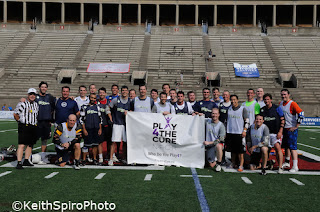
  I just experienced a powerful example of a community coming together in the interest of making a difference in supporting cancer research. And with the help of this community, we raised over $120,000 for research in the laboratory of Dr. Daniel Haber at Mass. General Hospital.   I’ve written about how individual cancer researchers in labs across the country spend up to 75% of their time on fundraising when they should be spending 100% of their time in the lab doing what they do best. I’m ever more committed to identifying innovative research in Boston, and directing funds into these laboratories. The lacrosse community in greater Boston helped me put a stake in the ground because we showed it’s possible to identify a cancer researcher doing innovative work, then educate and rally a community to support a specific, tangible project.   We united the lacrosse community, and told our donors exactly where their money would go and the impact their dollars will have....

What An #EverydayAmazing Week It's Been

Image
I love Boston.   And I’ve written about my cancer journey and being the #CancerResearchEvangelist. This week reminded me of what I love about the city and this region. It started last Saturday when I was invited to by Ian Frenette, the President of the Boston Cannons professional lacrosse team to attend a game at Harvard Stadium with my boys.   We had the privilege of watching the game as VIPs at the Optum Champions Club. What a first class experience, and great hospitality by the team, and the opportunity to meet team majority owner Rob Hale.   I’ve been working with Ian and his team on an important initiative through Play4TheCure , the fundraising platform of the National Foundation for Cancer Research (NFCR) . NFCR and the Cannons are partnering on a new initiative to unite the lacrosse community with the medical and scientific communities in Boston to raise money and awareness about cancer research. We just announced the partnership today , part of the Cann...

If Not Us, Who? If Not Now, When?

We’ve all heard this quote, attributed to various people, most notably John F. Kennedy. It’s been used in a variety of contexts including other politicians. I even used it when I served on the School Committee in my town.   But it is so appropriate right now to think about this in context of the state of research & development investment in the United States, and in particular, basic cancer research. I was recently promoted to Cancer Research Evangelist at the National Foundation for Cancer Research , and in this role I will continue to be the voice for the urgency of funding for basic research.   I am determined to keep educating the public about the work being done in laboratories today that will lead to discoveries tomorrow. I've introduced you to many of these researcher on this blog. The U.S. is falling behind on investment in R&D to countries like China.   China’s total expenditure on research and development (R&D) has increased by 23% a year on av...