Posts

#Play4TheCure is Recruiting

Image
It’s been a whirlwind month for the Play4TheCure program at the National Foundation for Cancer Research ( NFCR ).   In June I saw firsthand the transformation from pink to lavender as student athletes continued to support cancer research for ALL CANCERS - with lacrosse joining the field hockey and soccer communities to Play4TheCure.   Because as we are learning from the  Precision Medicine Initiative and the NCI MATCH trials, potential treatments actually follow a new paradigm: based on targeted treatment of specific “actionable” molecular abnormalities in cancers independent of the organ site. This is a fundamental shift in thinking in driving better results, it is in part an outcome of genomic research and reflective of the research approach NFCR has been supporting for many years. As the Vice President of Development for the National Foundation for Cancer Research, I watched my Play4TheCure team work with The New Hampshire Youth Lacrosse Associat...
Good Things Take Time

Image
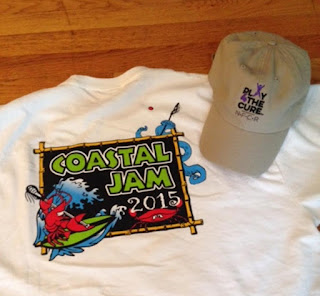
  I spent Sunday in Niantic, CT at the New England Coastal Lacrosse (NECLAX) year-end tournament, the Coastal Jam.   It’s an annual event, where hundreds of youth lacrosse athletes and their families convene for a friendly competition, and celebrate another season of lacrosse.   Play4TheCure is privileged to join the event this year as a charity partner, working with the teams to raise money for cancer research and shine a spotlight on the game of lacrosse.   Play4TheCure is a signature fundraising program of the National Foundation for Cancer Research (NFCR). Through this program, young athletes use their passion for sports to “Play4” loved ones affected by cancer.   The program started as a tribute to a mother fighting cancer and has grown to a powerful movement of tens of thousands of student athletes, playing for the cause. Now Play4TheCure is taking hold in lacrosse programs like NECLAX . But those of us raising money for cancer research know t...

Are We Losing Young Researchers?

It’s difficult for the general public to understand how hard it is for the scientific community to make profound discoveries in the laboratory.   Sure, it’s easy to be excited when an announcement is made about some game changing breakthrough.   But it’s not so easy to see how hard it is to get there.   We hear a lot now about the genetics of cancer, the genetics of resistance, and the genomics of a patient that is leading us to “precision medicine”.     It’s bold, and holds so much promise, exactly what we all hope for.   But of course, the boldest ideas have the longest road to travel.   The out-there science is slow to translate into real-life cures for patients.    As I discussed in my last post, there is a real crisis in the cancer research field and in science in general, because young scientists and those who want to be scientists, are finding it difficult to get financial support. The U.S. must recognize that if there are no young ...

Time to Move Beyond the Ribbons?

This past week, I had the pleasure of meeting Massachusetts Senator Ed Markey and Harvard Medical School Professor of Genetics, Dr. Fred Alt. They were both in Washington, DC for the presentation of the 2015 NFCR Szent-Györgyi Prize for Progress in Cancer Research, which was awarded to Dr. Alt and keynoted by Sen. Markey.   The common theme I heard from both of these distinguished leaders was captured in a Huffington Post article written by Sam Stein , who attended the event . Stein succinctly wrote that “U.S. Science has never been more imperiled”. He noted that the lack of funding for basic scientific research not only prevents new discoveries, but it also means that we are losing promising scientists whose work can’t get funded.    10 years ago, nearly a third of qualified research was funded by NIH.   Now that number is only 14% (actually even lower for oncology, near 9%).   As Sen. Markey said, “sadly, support for scientific research in our countr...

Liquid Biopsy: The “Holy Grail”?

Circulating tumor cells (CTCs), tumor cells that are shed from primary tumors in the body and carried through the circulation, were discovered some 140 years ago.   Researchers have struggled to create an efficient way of capturing these elusive and rare cancer cells, and perform genetic analysis to learn about their growth characteristics and molecular evolution. I’m inspired and encouraged by the work of Dr. Bert Vogelstein, at Johns Hopkins.   Dr. Vogelstein is credited with having proved that damaged DNA causes cancer.   Nearly every type of cancer sheds DNA into the bloodstream, so Vogelstein and his colleagues are trying to prove that cancer can be diagnosed much earlier -- perhaps decades earlier -- using a procedure called "liquid biopsy." But the technology isn't clinic-ready yet, and the screening process is still too expensive.   We are nowhere near the reality of liquid biopsy being used in, for instance, your annual check-up.   Making such...

Gratitude and Trust

I’ve been thinking about these two words recently. Yesterday marked the 17th anniversary since my lobectomy surgery at Massachusetts General Hospital in Boston. This deeply personal experience has led me to embrace gratitude and trust as key components to both my personal life and career. So I’m in kind of a unique position to hopefully make an impact on the world.   I have abundant gratitude personally for being a lung cancer survivor.   And I sincerely believe trust is the foundation of every relationship, every encounter in my personal and professional life.   My motivation and commitment are based on sincere interest in helping move cancer research from the laboratory to the patient bedside, because I have been there. It defines me. This is the blending of my personal story and my professional life.   Gratitude and Trust . Gratitude: Surviving cancer…what could you be more grateful for?   But it’s more than that.   It has made me apprecia...

Investing in People

My life really has been quite an odyssey. I looked up the definition of odyssey recently: " a long series of wanderings or adventures, especially when filled with notable experiences, hardships, etc." My lung cancer experience was one of those hardships I guess.  But more importantly, it totally changed the way I looked at everything; my family, my friends, my work, my future... When you are told you have a life threatening illness like cancer, you become vulnerable.  But you also gain an inner strength to not only fight the disease, but do something!  I wanted to help other cancer patients get information to make informed decisions about their treatment options.  I was lucky, I lived in Boston, and had access to great care at Massachusetts General Hospital.  But being from Minnesota, where many of my relatives lived in rural areas, I wanted them to have the same benefit. So I became an advocate for patient education, and started to...

My Story

I remember the exact moment as if it was yesterday. I was out for dinner with friends when my cell phone rang. It was my doctor from Massachusetts General Hospital, Dr. Lee Kaplan. I thought it was strange for him to call me at night. “Dave, it’s Lee. You need to come in to see me…we found a tumor on your lung.” My world stopped. I was a young, nonsmoker with boys were 5, 3 and 1 years old. This news stopped me dead in my tracks. If you've been diagnosed with cancer, or a loved one has, you know EXACTLY what I felt.  My life was forever changed. There were appointments with respiratory specialists, CT scans, MRIs, surgeons, and lots of time to worry “am I going to die?” After the lobectomy (removal of half of my left lung), came months of treatment and painful recovery. I kept telling myself, “one day at a time…one hour at a time…one minute at a time”. I am so thankful for my wife Missi who helped take care of me, while keeping things together for our family. It made me see the wo...